
MEDICARE, EXPLAINED
Medicare Part A
The coverage that steps in when you're admitted.
Nobody plans for the days that end in a hospital admission. Medicare Part A is the coverage that quietly does its job when those days happen. It helps pay for your hospital stay, including the room, meals, medications, and care you receive from the moment you're admitted through your recovery. If your health takes a turn that requires more than an outpatient visit, this is the part of Medicare that steps in.
What Medicare Part A Covers

Hospital Stays
Your room, meals, and the medications given to you during treatment.

Skilled Nursing Care
The recovery time you may need in a facility after a hospital stay.

Hospice Care
Support at the end of life, whether that happens at home or in a dedicated facility.

Home Health Care
Medical care delivered at home for specific situations your doctor signs off on.

Mental Health Care
Inpatient psychiatric care during a hospital stay, including up to 190 lifetime days in a specialized facility.
What Medicare Part A Won’t Cover
Part A won't pay for a private room or private nursing unless your doctor determines either is medically necessary. It also won't cover long term custodial care in a nursing home, which is the ongoing help with bathing, dressing, and eating that begins once the medical recovery is behind you. That kind of care sits outside Medicare entirely, and understanding the gap before you're standing in it can save your family a difficult conversation later.
Enrollments and Costs
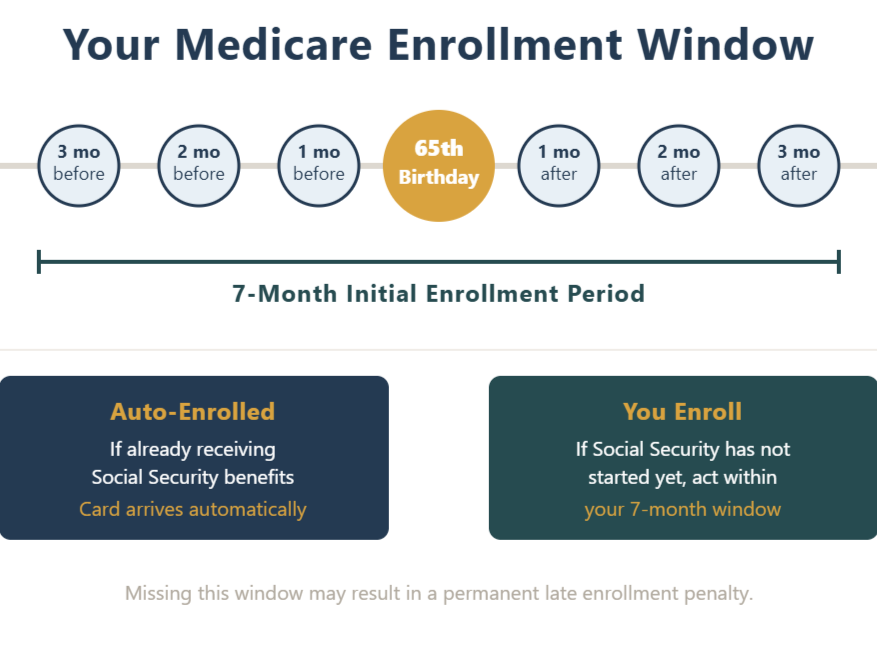
Enrollment: If you're already receiving Social Security, Medicare will enroll you automatically the month you turn 65, and your card will arrive without you lifting a finger. If Social Security isn't part of your picture yet, the enrollment is yours to handle. You'll have a seven-month window to do it, starting three months before your 65th birthday and closing three months after.
What It Costs: Most people don't pay a premium for Part A. If you or your spouse worked and paid Medicare taxes for at least ten years, your coverage is premium-free for the rest of your life. If your work history doesn't reach that ten-year mark, there's a monthly cost involved, and it can be significant depending on how many quarters you did contribute.
Medicare Part A FAQs
Does Part A cover surgery?
1
If the surgery happens while you're admitted, yes. If it's outpatient, that's Part B.
2
How do I get started?
Getting started is simple. Reach out through our contact form or schedule a call—we’ll walk you through the next steps and answer any questions along the way.
What if I need to go to a nursing home?
3
Part A will cover short-term skilled nursing care after a qualifying hospital stay, when you're still recovering and need ongoing medical support. It won't cover the kind of long-term nursing home stay where the goal is help with daily living rather than medical care. That distinction catches many families off guard, and it's worth thinking through well before it becomes urgent.
Yes, and it doesn't work the way most insurance does. The Part A deductible resets with each new benefit period rather than once per year. If you're admitted more than once in a short stretch, you could find yourself paying the deductible more than once in the same calendar year.
Is there a deductible?
4
Can I have Part A without Part B?
5
You can, though very few people actually do. Part A on its own leaves the everyday side of your medical care completely uncovered, and those outpatient costs quietly add up faster than most people expect.
Still Have Questions?
Medicare comes with a lot of details, and it's normal to have questions along the way. That's exactly what we're here for. Reach out anytime, whether you're just starting to look into your options or trying to sort out a specific decision. There's no cost to the conversation, and no obligation attached to it.